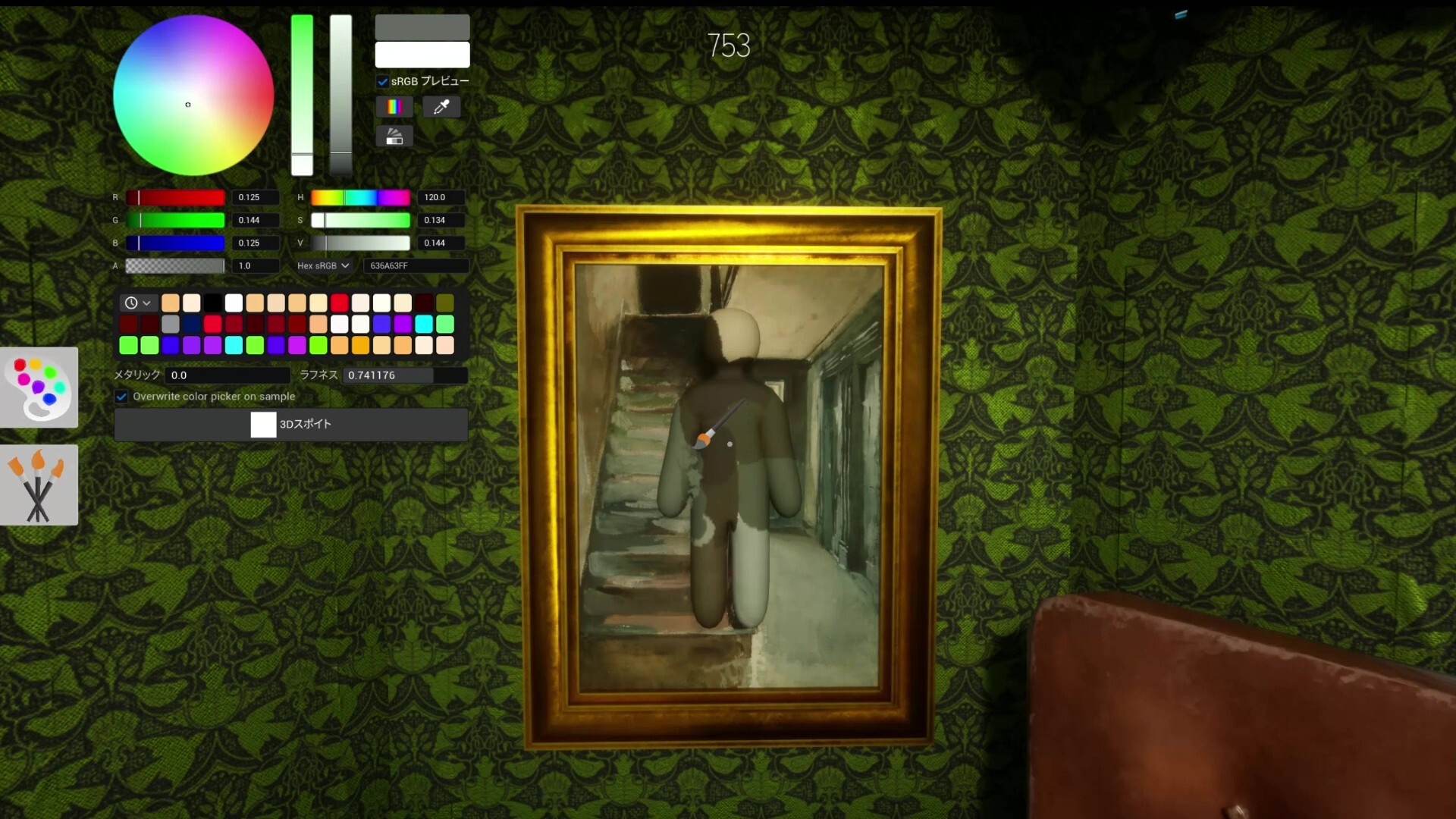
Name the first visible failure—not only the place where you were found—then change that one variable in your next match.
Last checked: 2026-07-10
A close color match can still fail. Seekers read the whole scene: outline, value, reflections, motion, placement, and any unpainted patch. Use the first thing that seemed to give you away—not every mistake you noticed after the round.
Post-match field check
What did the Seeker notice first?
Choose one symptom for a likely diagnosis and one correction to test next match. With JavaScript off, all six field notes remain visible below.
All diagnoses are shown. Pick the closest symptom to narrow the field notes.
01 / Silhouette
Your shape read as a player before your paint read as scenery.
Diagnosis: A clear head, shoulder line, elbows, knees, or feet can survive a good color match. Clean walls make those landmarks easier to read.
Next-match action: Hide one major landmark against an edge or prop, then choose a pose that continues an existing line instead of standing centered on a flat surface.
Practice silhouette-breaking in the Hider guide02 / Brightness
The value mismatch was stronger than the hue match.
Diagnosis: The sampled color may be close while room lighting makes your body visibly brighter or darker than the surface around it.
Next-match action: Step the camera back to likely Seeker distance and compare light-versus-dark first. Adjust for the local shadow rather than trusting the picker at close range.
Practice value checks in the Paint guide03 / Material & shine
Your reflection behaved unlike the surface.
Diagnosis: Gloss on a matte wall—or a flat body beside polished metal—creates a moving highlight that can expose you even when color is convincing.
Next-match action: Spend one check on roughness and metallic. Rotate the camera once and watch whether highlights travel across you differently from the background.
Practice material matching in the Paint guide04 / Movement
Motion overruled otherwise credible camouflage.
Diagnosis: A camera correction, late shuffle, or panic move gives the eye a simple change to track. Once a Seeker has a cue, paint has less chance to protect you.
Next-match action: Finish positioning earlier and commit to ten still seconds when a Seeker enters view. Move only if the current line has already become unsafe.
Practice the lock-in routine in the Hider guide05 / Position
Your body occupied a place where scenery did not belong.
Diagnosis: Even good paint looks suspicious in the middle of a clean panel, across a traffic line, or where the room’s shapes and repeated patterns do not support it.
Next-match action: Choose a spot with an edge, seam, clutter, or repeating detail, and check the likely entrance angle before committing paint time.
Practice reading sightlines in the Maps guide06 / Incomplete paint
An uncovered body area became a high-contrast marker.
Diagnosis: Hands, feet, joints, back surfaces, or a thin white seam can remain visible after the obvious front-facing areas look finished.
Next-match action: Paint broad zones before details, then do one fast rotation to inspect feet, joints, and the far side. Stop polishing tiny areas until coverage is complete.
Learn the contrast scan in the Seeker guideTurn a guess into a useful test
Change one variable next match. If you alter the paint, pose, surface, and timing together, you will not know which correction worked. Keep the same basic plan and test the diagnosis above once.
- Survived longer: retain the correction and inspect the next weakest cue.
- Spotted the same way: choose a busier position or review the failure from a Seeker’s scan order.
- Unsure what happened: ask which cue was noticed first, not merely where you were found.
A 20-second pre-lock check
- Read the body as a dark shape: does it still look human?
- Compare brightness before exact color.
- Rotate once to check shine and missed paint.
- Confirm the spot makes sense from the main approach.
- Stop moving before the Seeker has a clean view.
Continue with the Hider guide for pose and timing, the Paint guide for value and material, the Maps guide for sightlines, or the Seeker guide to learn what opponents scan first.