A practical MECCHA CHAMELEON how-to-play guide with match flow, Hider actions, Seeker actions, ammo-limit rules, and first-round examples.
Last checked: 2026-07-10
Best use: understand what happens in a match, then jump to Hider/Seeker pages for advanced strategy.
MECCHA CHAMELEON is a hide-and-seek game with a painting twist: Hiders start as visible bodies, then paint and pose to look like part of the stage. Seekers win by finding everyone before time runs out.
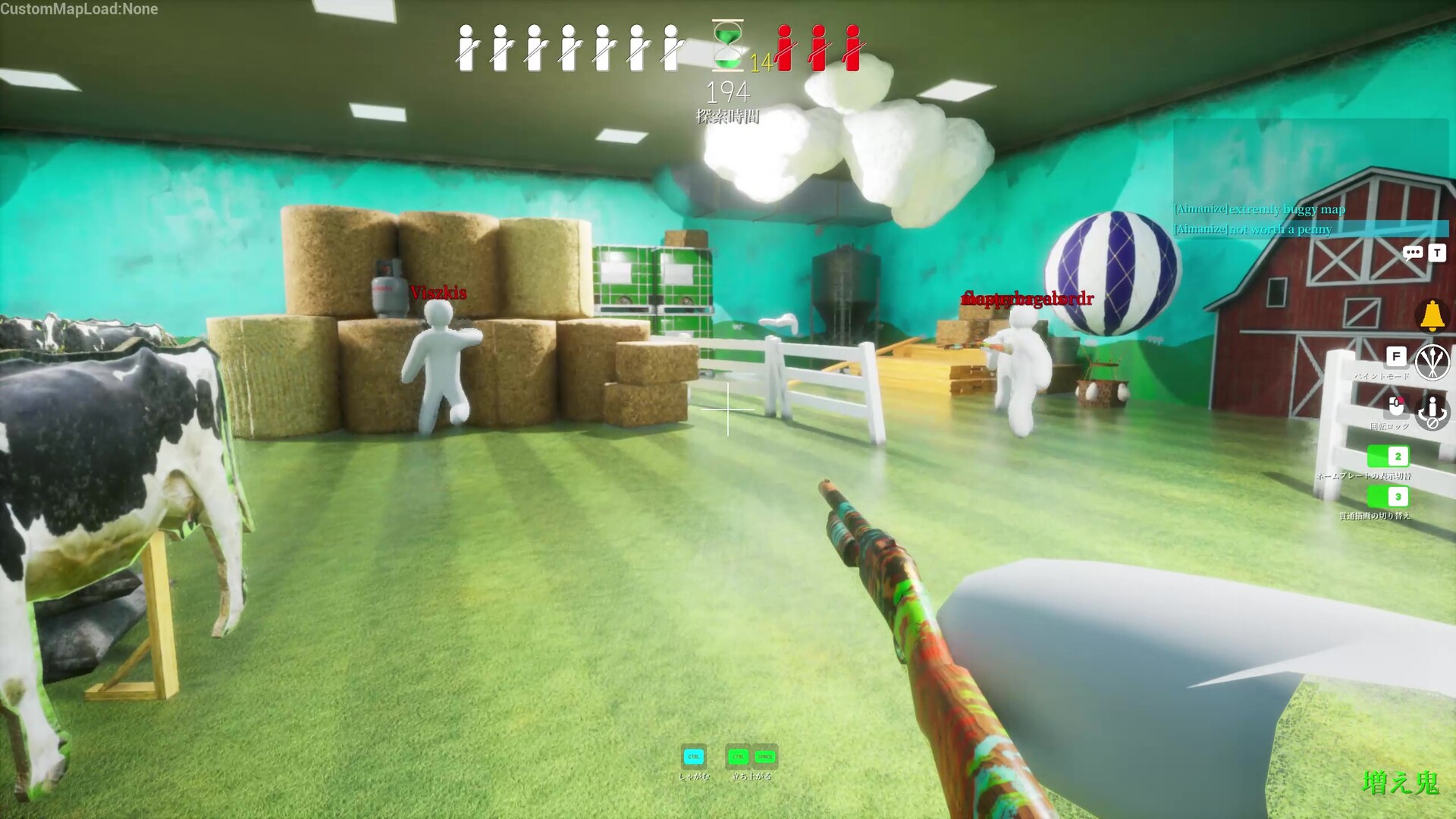
Match flow in one view
What Hiders do
A Hider has three jobs:
- Choose a believable surface — wall seam, shelf, pipe, carpet, poster, shadow, prop cluster.
- Paint the body to match that surface — color is only the start; brightness/material matter too.
- Pose to reduce the human outline — hide head, shoulders, knees, elbows, and feet.
A mediocre color on a broken silhouette often survives longer than a perfect color on a clean human outline.
What Seekers do
Seekers should not run around shooting every odd pixel. Use a layered scan:
If a match uses optional Hunter ammo limits from update2.3.0, missed shots can cost ammo and hits can restore ammo. In those matches, wait until at least two clues agree.
First-round example
Bad first round
You run to a blank wall, sample one color, paint your body mostly that color, then stand in the open. The Seeker sees a clean head-and-shoulder outline and finds you quickly.
Better first round
You choose a wallpaper edge near furniture, paint the torso and head in broad zones, align your body with the pattern, and stop moving before the Seeker enters. Even if color is imperfect, the outline is harder to read.
Public matches, player count, and Workshop maps
Steam indicates public matches and viewer participation are supported, with recommended player count depending on host network environment. Treat public matchmaking quality as part of the experience:
- If a lobby fails, try a non-Workshop lobby before changing settings.
- If a custom map stalls, check the Workshop item and restart Steam/game.
- If a public room is toxic or spammy, leave and use friends/moderated lobbies.
What is Reverse Chicken Race?
Steam News for update2.4.0 describes Reverse Chicken Race as a mode where players deduce a hidden player’s identity from body paint, find them first, and earn points. Hiding players earn points by staying unnoticed. The strategy shift is simple: paint is not only camouflage; it can become evidence.
Read next
- New player route: Getting Started
- Painting depth: Paint System Guide
- Hider depth: Hider Guide
- Seeker depth: Seeker Guide