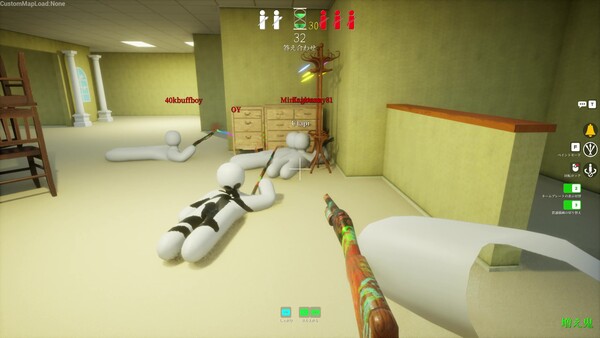
A decision-focused MECCHA CHAMELEON strategy guide: how to choose surfaces, bait low-confidence shots, scan rooms, handle ammo limits, and adapt to randomized maps.
Last checked: 2026-07-10
Best use: use this after you understand the basic rules. This page is about in-match decisions, not setup or troubleshooting.
MECCHA CHAMELEON strategy is about forcing the other side into bad visual decisions. Hiders create uncertainty. Seekers remove uncertainty.
Hider decision rule: choose spots that remove clues
Before locking in, score your spot:
Seeker decision rule: require two clues
In normal matches, you can be more aggressive. In ammo-limit matches, shoot only when two clues line up:
- silhouette + brightness error
- silhouette + wrong material
- movement + suspicious position
- repeated pattern break + body landmark
One weird color patch is noise. A weird color patch shaped like a shoulder is evidence.
Hider strategy by surface type
Wallpaper / pattern
Align your pose with the pattern. The goal is not perfect color; it is making the body outline stop reading as human.
Brick / concrete
Prioritize roughness and brightness. Glossy paint will betray you even if the RGB value is close.
Dark pipe corners
Use darkness, but avoid pure black unless the corner is truly black. Seekers check suspicious black blobs.
Bright stylized areas
Sample actual surfaces. Candy/city/signage colors can be much more saturated than natural guesses.
Strategy in ammo-limit matches
Official update notes say optional Hunter ammo limits can make misses consume ammo and hits restore ammo. This changes both sides:
Good Seeker behavior
- Wait for multiple clues before shooting.
- Communicate likely zones instead of everyone guessing separately.
- Prioritize clean human outlines over vague color mismatches.
Good Hider behavior
- Choose ambiguous spots that make seekers hesitate.
- Bait low-confidence shots with pattern noise.
- Avoid fleeing unless already exposed; movement confirms suspicion.
Strategy on randomized maps and Workshop maps
Updates added random elements to Mansion and Sewer, and Workshop maps vary heavily. That means fixed “best spot” lists age badly. Long-term skill is better:
- Enter a room and identify surface families: wallpaper, brick, metal, pipes, clutter, bright props.
- Predict seeker path: doorway, center scan, corners, then props.
- Hide where your body becomes part of a larger visual group.
- Avoid famous/meme zones unless the lobby is inexperienced.
What to practice next
- If you lose as Hider: practice one surface type for a few rounds.
- If you lose as Seeker: practice scan order and stop random shooting.
- If maps feel impossible: read Maps Guide and Color Matching.